Solution for Teams
Engineering
Localize your apps, websites, and games with automated content updates by integrating with your repo
Marketing
Scale your marketing efforts through localization. Connect your marketing tools to automate the process
Support
Create and maintain multilingual support docs and other important content
Designers
Preview multilingual content, customize translations before implementation
Translators
Translate online with all the benefits of a desktop CAT tool
Use Cases
Software Translation
Set an automated process once and receive continuous localization in parallel with development
Mobile App Translation
Localize Android or iOS apps into any language and reach new markets
UI Translation
Localize your product's user interface and create global design
Website Translation
Create a multilingual website by integrating Crowdin and your website's CMS.
Multilingual Support
Translate customer service chatbots, emails, and documentation
Game Translation
Translate your game and enter the international market
E-commerce Translation
Automate localization of your e-commerce website and reach global customers.
Apps & Integrations
Browse 700+ integrations and plugins
AI Translation
Empower your business with an AI translator fine-tuned to your company's needs and get 95% publishable translations
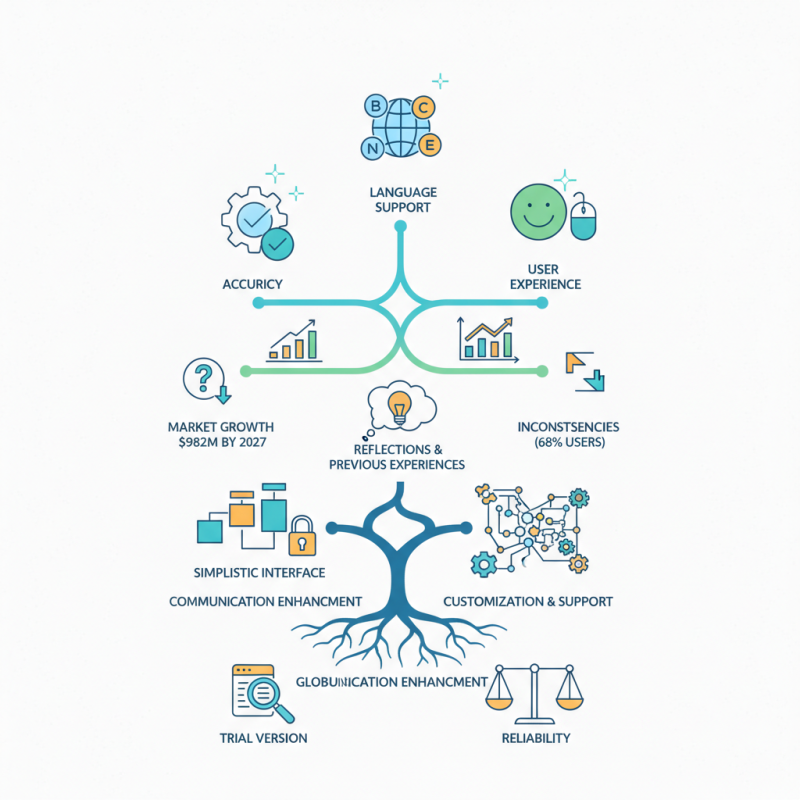
Crowdin Resources Resources on localization services, translation and localization tipsChoosing the right machine translation software is vital for businesses and individuals today. Recent industry reports suggest that the global machine translation market will reach $982 million by 2027. With increasing globalization, the demand for effective translation tools is significant. Organizations are expected to invest heavily in this technology to enhance communication.
When selecting machine translation software, considerations include accuracy, language support, and user experience. Some tools excel in specific languages but falter in others. A 2021 survey revealed that 68% of users reported inconsistencies in translation quality. This underscores the need for careful evaluation.
Moreover, while many solutions appear promising, they often lack comprehensive support or customization options. Users must weigh simplistic interfaces against the complexity of their translation needs. Reflections on previous experiences can guide choices. Using trial versions of software can provide insight into usability and effectiveness. Ultimately, the right tool should balance performance and reliability.
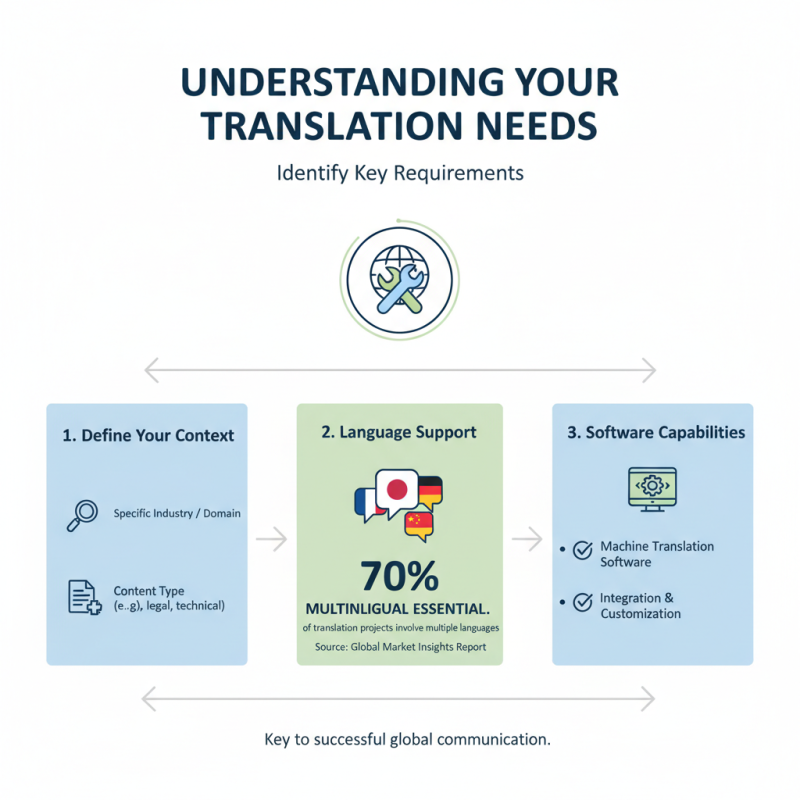
When selecting machine translation software, understanding your translation needs is crucial. Begin by identifying key requirements that suit your specific context. This includes considering the languages you need to translate. According to a recent report from the Global Market Insights, nearly 70% of translation projects involve multiple languages, making multilingual support essential.
Evaluate the types of content you will translate. Technical documents, marketing materials, and casual communication each require different translation approaches. A study by the MultiLingual Magazine indicates that 55% of businesses report differences in tone and terminology when dealing with various content types. This suggests that the chosen software should cater to those nuances.
Another important factor is integration capabilities. Many organizations rely on content management systems or customer relationship management software. A Forrester report highlights that 40% of companies valued integration features when choosing translation solutions. Not all software provides seamless integration, which may cause further challenges. Reflect on these specifics to ensure your chosen machine translation software aligns with your unique translation needs.
When selecting the right machine translation software, it’s crucial to assess specific features and capabilities. Look for accuracy in translations. Some systems may excel in technical jargon, while others handle everyday language better. If your projects involve multiple languages, verify the software’s language support.
Compatibility is another essential factor. Does the software integrate seamlessly with your existing tools? Check user reviews for insights into integration experiences. A user-friendly interface can also enhance productivity. If a software is difficult to navigate, it may hinder your work instead of helping.
Tips: Start with a trial version. This will allow you to test the software with your content. Pay attention to the context of translations. Sometimes, automated systems may miss nuances, leading to misunderstandings. Regular updates are vital too. Rapidly evolving languages and terminologies can change frequently. Make sure to choose software that keeps up.
When selecting machine translation software, evaluating language support is crucial. A recent report by Common Sense Advisory revealed that 72% of global consumers prefer to interact with content in their native language. This statistic underscores the importance of comprehensive language coverage. Companies need to ensure that their chosen software includes key languages relevant to their target audience.
Many translation systems focus heavily on popular languages like English, Spanish, and Mandarin. However, they often neglect less common languages. A robust machine translation solution should support a wide range of dialects and regional variations. For example, if a business overlooks local dialects in the Arabic language, it could alienate potential customers in regions like the Gulf or North Africa. In fact, a survey indicated that 56% of users abandon a site if it’s not available in their preferred language.
Moreover, language nuances and cultural context matter. Machine translation is not flawless; there can be inaccuracies and misunderstood phrases. Users have reported mistranslations leading to miscommunication. A good translation tool should include options for human post-editing to improve the final output. This way, the software can achieve a balance between speed and accuracy, ultimately enhancing user experience.
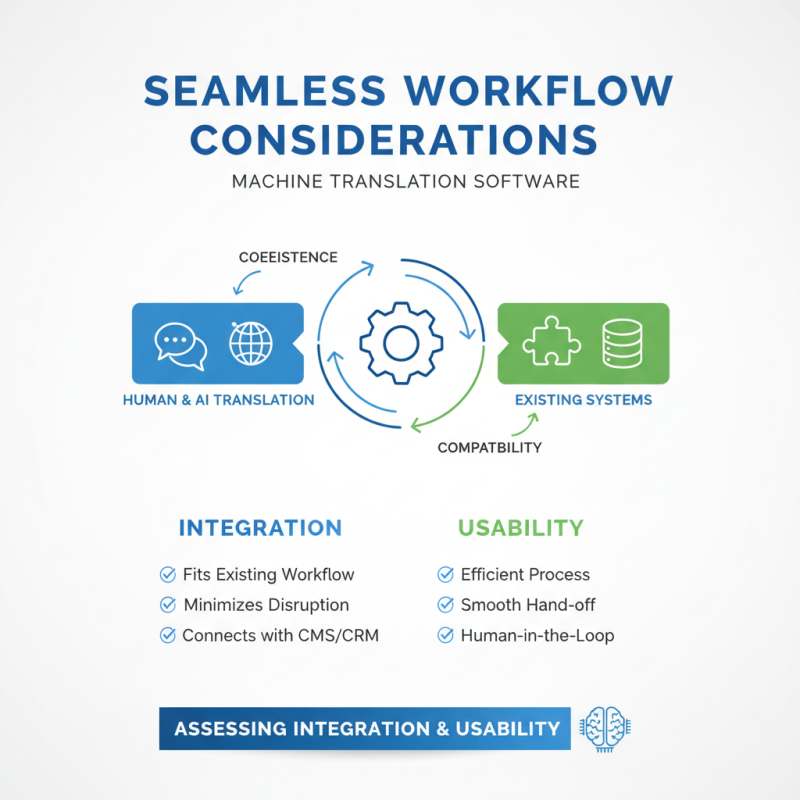
When selecting machine translation software, integration is a key factor. It should fit seamlessly into your existing workflow. A smooth integration minimizes disruption. Look for tools that can connect with your current systems, whether it’s a content management system or a customer relationship management tool. This compatibility supports an efficient process. It creates an environment where both human and machine translation can coexist.
Usability also plays a critical role. The software should be user-friendly. Complex interfaces deter effective use. You need a platform that offers clear options and intuitive navigation. Pay attention to the learning curve. A steep one can lead to frustration. Gather feedback from team members about their experiences. Sometimes, what seems straightforward might not be practical. UI simplicity often leads to better adoption.
Additionally, consider the need for customization. Different projects demand different features. Assess if the software allows you to tailor it to your specific needs. Flexibility can enhance the translation process. Ensure that the tool can adapt to various content types. Reflecting on your past experiences helps identify these requirements. A thoughtful mix of integration and usability enhances overall effectiveness.
When it comes to machine translation software, cost is often a major concern. Many budget options provide decent functionality without breaking the bank. It's essential to evaluate what you truly need versus what you can compromise on. For example, a basic interface might suffice if you're using the software for simple texts. However, if your work involves complex documents, investing a bit more may be wise.
Some solutions offer tiered pricing. They can scale features according to your needs. This approach helps businesses avoid overspending on unnecessary capabilities. Pay attention to user reviews and expert recommendations. Finding reliable feedback can illuminate any limitations or advantages of each option. Some tools may lack support or community engagement, which could affect your experience later.
Lastly, consider the long-term implications of your investment. While cheaper options are tempting, they may not always deliver results. Assess if they can integrate with your existing systems. Integration can save significant time and effort in the long run. Ultimately, choosing the right software is about aligning features, ease of use, and value—ensuring they meet your evolving translation needs. Finding that balance is crucial in today's fast-paced environment.
Crowdin has been translated by volunteers, and some translations might be incomplete. You can help us translate Crowdin into your language by adding new translations or voting for existing ones.
Contribute language Global website