2026 Top Trends in Translation and Localization You Should Know?
As we enter 2026, the fields of translation and localization are evolving rapidly. According to a report by Slator, the global translation market is projected to reach $56 billion by 2027. This significant growth reflects an increasing demand for multilingual content across various industries. Companies recognize that effective translation and localization can help them reach broader audiences and enhance their global presence.
The rise of artificial intelligence is another key trend shaping translation and localization. This technology not only streamlines processes but also improves accuracy. However, a reliance on AI raises questions about authenticity. Can machines truly capture cultural nuances? As businesses adopt these tools, they must remain vigilant. Authenticity in translation and localization is crucial for maintaining brand integrity.
Industry experts suggest flexibility is vital. The needs of consumers change rapidly, influenced by cultural shifts and technological advances. While some companies may feel tempted to prioritize speed, overlooking quality can lead to costly mistakes. As we reflect on these trends, it is essential to integrate both technology and human expertise in translation and localization strategies. Balancing these elements will be critical for success in the global marketplace.

Emerging Technologies in Translation and Localization for 2026
In 2026, emerging technologies are set to revolutionize translation and localization. Neural machine translation (NMT) is becoming more advanced. This technology enhances the quality of translations. It learns context better than previous models. However, it still struggles with idiomatic expressions and cultural nuances.
Tips: Always review translations for accuracy. NMT can miss subtle meanings. Collaborate with human translators to ensure quality.
Artificial intelligence (AI) is creating smarter localization tools. These tools adapt content for specific audiences. They analyze user behavior and preferences. Yet, they may not grasp every cultural reference. Relying solely on AI can lead to errors.
Tips: Use AI as a supplement, not a replacement. Maintain a human touch for sensitive content. Balancing technology with human insight is essential for effective communication.
As virtual reality (VR) and augmented reality (AR) gain traction, localization will need to adapt. These technologies can provide immersive experiences. However, they require careful translation to avoid disconnection. Users may become frustrated if localized content feels out of place.
Tips: Test localized content in real scenarios. Gather feedback to refine the experience. Engaging the local audience is key to successful localization.
2026 Top Trends in Translation and Localization You Should Know
| Trend |
Description |
Expected Impact |
Adoption Rate (%) |
| AI-Powered Translation |
Utilizing artificial intelligence to enhance translation accuracy and efficiency. |
High accuracy in niche translations. |
75% |
| Real-Time Collaboration Tools |
Platforms that allow multiple translators and clients to work together in real-time. |
Increased efficiency and reduced turnaround time. |
60% |
| Integration of AR/VR |
Use of augmented and virtual reality for immersive localization experiences. |
Enhanced user engagement in multilingual environments. |
50% |
| Video Captioning and Subtitling |
Growing demand for multilingual video content with accurate captions. |
Wider audience reach and better accessibility. |
80% |
| Cloud-Based Localization |
Localization processes moving to cloud platforms for easier access and management. |
Simplified collaboration and scalability. |
70% |
The Growing Importance of Artificial Intelligence in Language Services
The role of artificial intelligence (AI) in language services is expanding rapidly. A report by CSA Research highlights that over 70% of organizations prioritize AI in their translation processes. This focus on AI is reshaping how businesses approach localization. AI tools enhance efficiency and reduce costs, allowing for quicker turnaround times. Yet, reliance on these technologies can present challenges.
While AI can streamline workflows, it may lack the contextual understanding of human translators. According to a study by GALA, nearly 60% of respondents believe that human oversight is vital for quality assurance. It’s crucial to strike a balance between speed and accuracy. Adding humans to the translation loop ensures the nuanced meanings of languages are preserved.
Tips: Invest in training for human translators to work effectively alongside AI tools. This combination can capitalize on the strengths of both parties. Always review AI-generated translations for errors or misinterpretations. Ensure that localization strategies remain culturally relevant to the target audience.
Cultural Adaptation: Trends in Localization for Global Markets
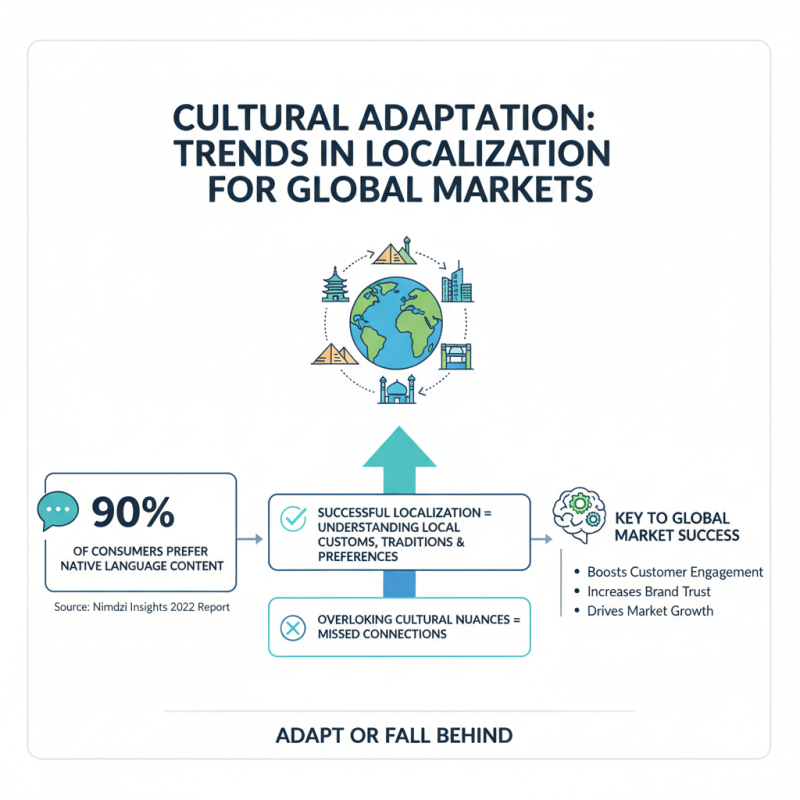
Cultural adaptation is vital for successful localization in global markets. According to the Nimdzi Insights 2022 report, over 90% of consumers prefer content in their native language. This highlights the importance of understanding local customs, traditions, and preferences. Brands that overlook this can miss vital connections with their audience.
Recent trends indicate a growing demand for culturally nuanced translations. For example, the Globalization and Localization Association (GALA) noted that companies investing in cultural adaptation see up to 50% higher engagement rates. While some brands excel, many still struggle. They often rely on literal translations, which can lead to misunderstandings and alienate potential customers.
Social media plays a significant role in cultural adaptation. Companies that engage with local influencers can create authentic connections. However, this approach requires careful consideration. Oversights in cultural references can lead to backlash. Each market is unique, and what works in one may fail in another. Therefore, a thoughtful approach is critical, blending creativity with cultural insights.
The Rise of User-Generated Content and Its Impact on Translations
The rise of user-generated content (UGC) significantly influences translation and localization. Today, everyone with internet access can share their experiences and thoughts. This shift transforms how companies approach multilingual content. Traditional professional translations may not resonate as well with audiences anymore.
UGC often reflects authentic voices. This authenticity can drive engagement that polished marketing messages cannot achieve. However, it also presents unique challenges. Translators must navigate diverse dialects and colloquialisms. Every user’s style and tone vary widely, complicating the task of maintaining consistency.
Moreover, UGC can be more dynamic. Content updates happen rapidly, demanding agile translation solutions. Relying solely on automated translation tools can yield errors, as nuanced meanings may be lost. Quality assurance becomes crucial, yet under-resourced teams often struggle to maintain high standards. Addressing this imbalance requires a thoughtful approach to localization strategies. This evolving landscape calls for ongoing reflection on best practices in the field.
Sustainability in Translation Practices: Trends to Watch in 2026
Sustainability has become paramount in translation and localization. As businesses grow, the demand for eco-friendly practices increases. Companies are exploring ways to reduce carbon footprints while maintaining quality translations. This trend is not just a nicety; it's a necessity for future growth.
Many organizations are shifting towards digital tools that minimize paper usage. Cloud-based platforms allow for efficient workflows, encouraging remote collaboration. These tools often reduce energy consumption. However, challenges remain, particularly in achieving full carbon neutrality.
There is a growing emphasis on ethical sourcing of translation resources. Freelancers and agencies must prioritize sustainable practices in their operations. Yet, some still struggle with balancing cost and sustainability. Finding this balance is crucial for long-term success in a competitive market.
2026 Trends in Translation and Localization: Sustainability Practices