2026 Best Localization Agency for Global Business Expansion?

In an increasingly globalized world, businesses are striving to reach diverse markets. Choosing the right localization agency can make or break this endeavor. A localization agency helps brands modify their messaging, ensuring it resonates with local audiences. The right agency is a strategic partner, fostering brand trust and engagement.

As companies expand globally, they face unique challenges. Language differences, cultural nuances, and regional preferences can complicate marketing efforts. Not every localization agency can navigate these complexities effectively. Some fail to capture the essence of local culture, resulting in missed opportunities. Businesses must critically evaluate the agencies they consider.

Selecting the best localization agency for 2026 requires careful thought. Detailed research and client feedback are essential. Companies should analyze previous projects and case studies. Not every agency will align with specific goals. A strategic choice can elevate brand presence globally. Reflecting on past experiences can guide firms toward the right decision.

2026 Best Localization Agency for Global Business Expansion?

The Importance of Localization for Global Business Expansion in 2026

In 2026, localization is crucial for global business expansion. A recent industry report revealed that companies with effective localization strategies can increase revenue by up to 40%. This highlights the profound impact of adapting to local markets. Ignoring cultural nuances can lead to miscommunication. For instance, a simple marketing campaign could backfire if it doesn't resonate with local values.

Data indicates that 75% of consumers prefer to buy products in their native language. This preference illustrates that language is more than just words; it’s about connection. Localization involves translating not just text but also intent. However, many businesses overlook this. They often use automated translation tools that fall short. Such tools can miss context and tone, leading to a disjointed customer experience.

Moreover, around 60% of companies fail to understand the importance of local SEO. This oversight can hinder growth in foreign markets. A strong online presence is vital. Yet, if your content doesn't align with local search habits, you could lose potential customers. Failure to localize adequately can cost businesses dearly. Understanding these elements is essential for thriving in today’s global landscape.

Key Factors for Selecting the Best Localization Agency for 2026

Choosing the right localization agency is crucial for businesses aiming to expand globally. An effective agency can help bridge cultural gaps and communicate brand messages more effectively. Focus on a few key factors that steer this selection process.

Experience plays a significant role. Look for agencies that have worked in your industry. They should understand not just the language but also the local market nuances. Do they have a proven track record? Ask for case studies. Such insights reveal how they tackle challenges.

Tips: Consider the agency’s team. Are they native speakers? Proficient linguists alone are not enough. They should grasp local trends, cultural subtleties, and consumer behavior. A team that can relate to your target audience is an asset.

Flexibility and scalability matter, too. Your needs may evolve. The agency must adapt quickly without sacrificing quality. Check for feedback mechanisms. Are they open to revisions? Pay attention to how they respond to your concerns.

Tips: Communication is key. Establish a clear line between you and the agency. Regular updates can prevent misunderstandings. This is about building trust. You want a partner who listens and collaborates effectively.

Industry Insights: Growth of Localization Services Market by 2026

2026 Best Localization Agency for Global Business Expansion?

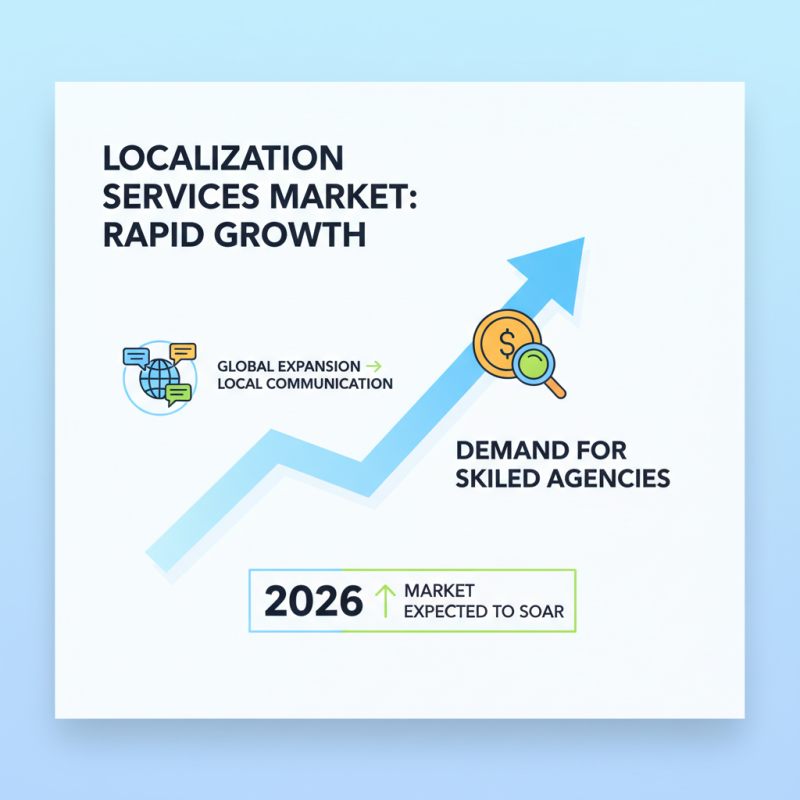
The localization services market is growing rapidly. Many companies are expanding globally. They need to communicate effectively in local languages. This demand drives the need for skilled localization agencies. By 2026, the market for these services is expected to soar.

Companies often overlook cultural nuances. Simple translations can miss the mark. Localizing content requires understanding the target audience’s preferences. This is where agencies can shine, but they must also learn and adapt. Feedback from clients and end-users is crucial. It's essential to iterate on strategies and improve continuously.

As globalization progresses, technology plays a key role. Automation tools can speed up workflows, yet human touch remains vital. A blend of AI and skilled linguists is necessary. Finding the right balance is challenging. Agencies must embrace both innovation and tradition to truly succeed in this evolving landscape.

Top Metrics for Evaluating Localization Agency Performance

Choosing the right localization agency is crucial for global business expansion. But how do you evaluate their performance? Metrics play a vital role here. Companies should focus on accuracy, speed, and cultural relevance.

Accuracy is about the precision of translations. A small error can lead to misunderstandings. Speed is necessary to meet deadlines in fast-paced markets. However, an emphasis on speed shouldn't sacrifice quality.

Another important metric is cultural adaptation. This involves making content resonate with local audiences. It's not just about translation; it’s about making messages relatable. This can be tricky. If the agency lacks local knowledge, the result may feel out of touch.

Client feedback can be invaluable here. Gathering insights from those who have used their services helps in making informed decisions.

Lastly, consider scalability. As your business grows, so will your localization needs. An agency must adapt to changing demands. Can they handle an increase in volume? What about new language requirements? Reflecting on these questions can reveal potential shortcomings in an agency's approach. Evaluating with these metrics will guide businesses in selecting a localization partner that truly understands global nuances.

Case Studies: Successful Global Businesses Utilizing Localization Strategies

In today’s global market, localization strategies are crucial for success. A recent report from a global consulting firm indicated that nearly 75% of consumers prefer content in their native language. This data emphasizes why businesses are investing in localization. Successful companies have adapted their messaging and products to meet local needs.

One case study highlights a tech firm that expanded into the Asian market. They invested in local language support and cultural adaptation. Their sales increased by 40% within the first year. However, they initially underestimated regional nuances. They faced backlash over cultural insensitivity in their marketing campaigns. This shows that localization is not just about translation; it requires deep cultural insight.

Another example involves a renowned online retailer entering European markets. They used comprehensive localization techniques, including local payment options and customer support in various languages. However, they encountered challenges with logistics. Deliveries were inconsistent due to different regulations across countries. These experiences underline how localization can drive growth but also presents complexities that need careful consideration.