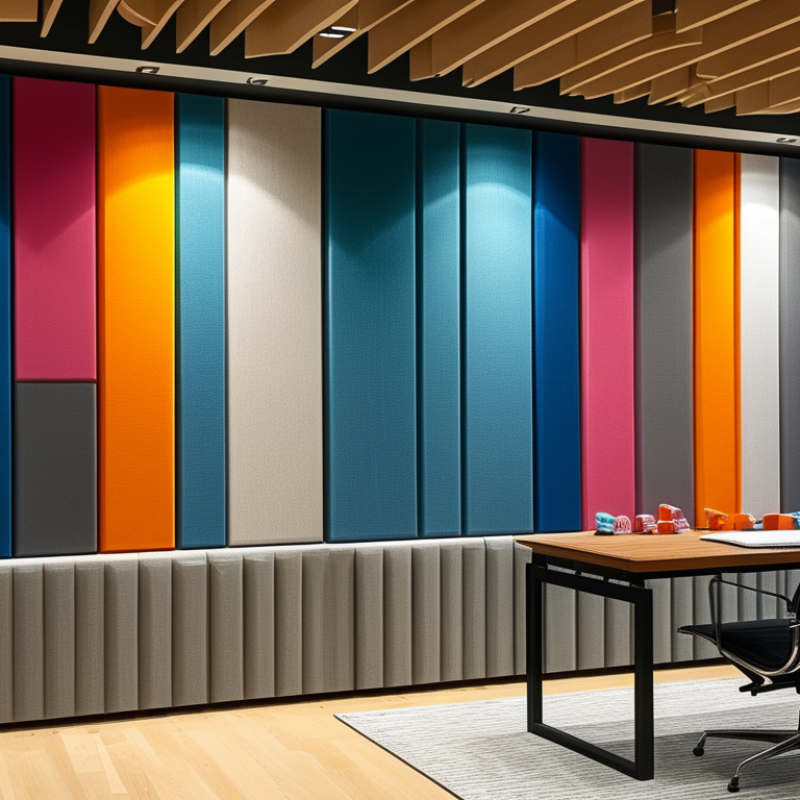
| Typical panel size | 600 × 1200 mm or 600 × 600 mm | These dimensions are easy to handle, transport, and repeat in a modular layout. | Use one size for a clean grid or combine both sizes to create a staggered pattern. |
| Absorber thickness | 75–100 mm for a general-purpose broadband panel | Thicker porous absorbers generally provide better low-frequency absorption than thin panels. | Allow the frame depth to accommodate the absorber without compressing it. |
| Air gap behind panel | 50–100 mm where wall space permits | An air cavity increases the effective depth of the absorber and can improve lower-frequency performance. | Use spacers, cleats, or French cleats to maintain a consistent gap from the wall. |
| Absorber material | Rigid or semi-rigid mineral wool, glass fiber, or polyester fiber board | Porous materials absorb sound by converting air-particle motion into small amounts of heat. | Select a product intended for interior acoustic use and follow its handling and safety instructions. |
| Fabric cover | Breathable, acoustically transparent fabric | A tightly woven or coated fabric can reflect sound and reduce the absorber’s effectiveness. | Test the fabric by breathing through it gently; avoid plastic-backed or impermeable coverings. |
| Frame construction | Lightweight timber frame with a rigid rear support or open back | A stable rectangular frame keeps the absorber flat and makes each module replaceable. | Keep the front face free from solid decorative boards that would block sound entry. |
| Panel placement | First-reflection points, rear wall, and selected ceiling areas | Early reflections can reduce speech clarity and create strong coloration in recording or listening spaces. | Use a mirror method or a helper to locate side-wall reflection points from the main listening position. |
| Recommended coverage | Begin with approximately 20–30% of the room’s wall and ceiling surface | Coverage should be adjusted according to room size, furnishings, surfaces, and the desired balance between absorption and liveliness. | Install modules gradually and listen or measure after each group is added. |
| Module spacing | 50–150 mm visual gap between adjacent modules | Spaced modules preserve some exposed wall area and make the system easier to rearrange. | Use a consistent spacer or installation template so the grid remains aligned. |
| Bass-frequency treatment | Use thicker broadband panels, corner traps, or membrane-based absorbers | Small, thin wall panels are mainly effective at mid and high frequencies and do not replace dedicated bass treatment. | Prioritize vertical corners and the rear wall when low-frequency buildup is noticeable. |
| Mounting method | French cleats, Z-clips, picture-rail hooks, or removable brackets | Removable hardware supports reconfiguration and simplifies maintenance. | Choose fasteners rated for the panel weight and the wall substrate; anchor into studs where possible. |
| Safety considerations | Use protective clothing and a suitable mask when cutting fibrous materials | Some insulation materials can irritate the skin, eyes, and respiratory system during fabrication. | Seal exposed edges with fabric or a compatible liner and follow local fire-safety requirements. |
| Performance verification | Use room measurements, clap tests, speech tests, or acoustic measurement software | Absorption coefficients vary with material, thickness, air gap, mounting, and test method; product ratings are not interchangeable without test conditions. | Treat published acoustic ratings as test-specific data and evaluate the complete installed system where possible. |