2026 Best Practices in Translation and Localization for Global Success?
In the rapidly evolving landscape of global business, translation and localization play a pivotal role. Experts like Professor David Grunwald, a recognized authority in this field, emphasize that "effective communication transcends language barriers." His insight underscores the necessity of adapting content for diverse markets.
As companies aim for international expansion, understanding best practices in translation and localization becomes crucial. Many brands struggle with cultural nuances and idiomatic expressions. Such oversights can lead to miscommunication and alienate potential customers. Awareness of these challenges is vital for success.
Organizations must focus on quality and cultural relevance in their translation efforts. Relying solely on machine translation may not capture the essence of local dialects. Investing in expert linguists and cultural consultants can enhance the effectiveness of campaigns. Reflecting on past localization failures can guide future strategies. This continuous improvement will elevate a company's global presence and foster deeper connections with international audiences.

Overview of Translation and Localization Practices in 2026
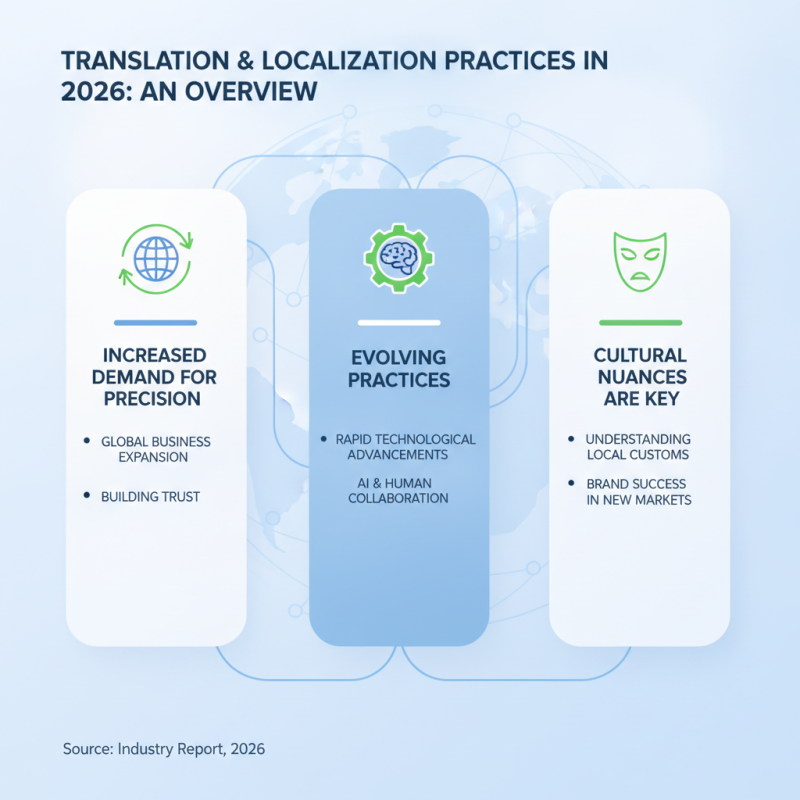
In 2026, translation and localization practices are evolving rapidly. The demand for precision has increased as businesses aim for global reach. Companies now seek to build trust through accurate translation. Cultural nuances are essential. Understanding local customs can make or break a brand’s success in new markets.
Artificial intelligence plays a significant role today. However, reliance on AI alone can lead to misinterpretations. Human insight remains crucial for contextual meanings. Teams combining technology and human expertise can create superior outcomes. Collaborative efforts are vital for quality assurance. Mistakes in translation can have lasting impacts on reputation.
Brands are also focusing on user experience. Websites and applications must resonate with local audiences. This includes language, design, and functionality. A one-size-fits-all approach is outdated. Businesses are realizing the importance of personalized content. They must be attentive to feedback. The journey is not flawless, and constant adaptation is key.
Key Strategies for Effective Global Communication
Effective global communication is essential for success in translation and localization. As businesses expand, understanding cultural nuances becomes paramount. Considering local preferences can enhance audience engagement.
Customized content resonates better with diverse populations. This practice builds trust and improves message clarity.
Tip:
Research your target audience deeply. Know their cultural values and preferences. This knowledge will inform your translation choices.
Another key strategy involves leveraging technology. Tools like AI and translation management software streamline processes. However, reliance on machines alone can be risky.
Human oversight is crucial for maintaining nuanced meaning in translations. Balancing technology and human expertise can yield superior results.
Tip:
Regularly review and update your translation process. This reflection helps identify areas for improvement.
Lastly, foster collaboration between teams. Encourage open communication between translators, marketers, and product teams. This teamwork ensures consistency in branding and messaging.
When everyone aligns, your message travels further.
Tip:
Conduct workshops to align teams on communication goals. This encourages collective ownership and accountability in translation efforts.
Technological Innovations Shaping Localization Efforts
Technological innovations are transforming localization efforts in remarkable ways. From AI-powered translation tools to machine learning algorithms, these advancements enhance accuracy and speed. Automation minimizes human error, but it lacks the nuance of human translators. This is where a balanced approach is essential.
Tips: Embrace technology but never completely rely on it. Always incorporate human oversight to ensure quality. Understanding cultural context remains crucial. A poor translation can lead to misunderstandings and damage your brand.
Language processing models analyze vast amounts of data, but they may miss local idioms. For instance, a direct translation can sound awkward or fail to convey the intended meaning. Organizations must be vigilant and willing to adapt. Regularly update glossaries and style guides according to user feedback.
Investing in localization is vital for global success. Use cutting-edge technology to drive efficiency while preserving linguistic integrity. Remember, while machines can assist, human expertise is irreplaceable.
2026 Best Practices in Translation and Localization for Global Success
Cultural Considerations in Translation for Global Markets
Cultural nuances play a crucial role in translation and localization. Understanding these differences can make or break a product’s success in new markets. For example, idioms and phrases often carry cultural significance that may not translate well. Literal translations can lead to misunderstandings that alienate potential customers. It’s necessary to tap into local expertise to ensure that messages resonate appropriately.
Another factor to consider is imagery and symbols. Colors may evoke different emotions across cultures. For instance, while white symbolizes purity in some cultures, it signifies mourning in others. Localizing visual elements can amplify the effectiveness of your content. Missteps in this area can appear tone-deaf. Investing in research and cultural consulting can help avoid these pitfalls.
Furthermore, be aware of local customs and values. Some cultures prioritize collectivism, while others emphasize individuality. This fundamental difference can shape how messages should be crafted. Failing to recognize and respect these values can lead to backlash against your brand. Translators should adopt a mindset of continuous learning and reflection to bridge cultural gaps effectively.
2026 Best Practices in Translation and Localization for Global Success - Cultural Considerations in Translation for Global Markets
| Cultural Aspect |
Importance Level (1-5) |
Best Practices |
Example of Implementation |
| Local Dialects |
5 |
Incorporate regional dialects in translations |
Use local terms in marketing materials |
| Cultural Norms |
4 |
Respect cultural practices and taboos |
Avoid reference to certain cultural festivals |
| Color Symbolism |
5 |
Understand color meanings in different cultures |
Use of red in China for good fortune |
| Humor |
3 |
Tailor humor to fit cultural context |
Adapt jokes that resonate with local audience |
| Formality Levels |
4 |
Adjust formality based on audience |
Use of titles in business correspondence |
Measuring Success: Metrics for Translation and Localization Efforts
Measuring success in translation and localization is more than just tracking word count. It involves analyzing various metrics to ensure global outreach is effective. One of the most telling indicators is the quality of translations. This can be measured through customer feedback and error rates. If clients report misunderstandings or confusion, it suggests that the translation may not meet local expectations.
Another vital metric is engagement levels. Are users interacting with localized content? Monitoring click-through rates and time spent on pages can reveal how well a translation resonates with the audience. Metrics like these provide insight into cultural relevance and whether the localization effort truly connects with the target demographic. A high bounce rate might point to translation issues or cultural misalignment.
Investing time in these metrics leads to improvement. However, it’s crucial to accept that not all efforts will yield immediate results. Some translations might miss the mark. Regularly assessing and adjusting strategies can enhance outcomes. An iterative approach allows for learning and development, ultimately fostering success in global markets.