Why is Localisation Software Essential for Global Business Success?
In today's global marketplace, the role of localisation software is paramount for success. Leading industry expert Dr. Anna Tran once stated, "Effective localisation transforms global challenges into local opportunities." This sentiment highlights how essential these tools are for companies seeking to broaden their reach.
Localisation software aids businesses in tailoring their content for diverse markets. It provides translations that respect cultural nuances and local customs. Dr. Tran emphasizes that understanding these differences can create deeper connections with customers. However, not all businesses prioritize this necessity. Some overlook the importance of proper localisation, risking alienation of potential customers.
Choosing the right localisation software can significantly impact growth. While many tools exist, not all deliver results. Companies must assess their specific needs and the quality of translations provided. Ignoring this step could lead to costly mistakes in branding and communication. The world is diverse, and successful businesses embrace this complexity through thoughtful localisation.

The Role of Localisation Software in Enhancing Global Reach
In today’s interconnected world, localisation software is crucial for businesses aiming for global success. It enables companies to adapt their products and services to meet local culture and language needs. This process involves more than just translating text; it requires understanding local customs and expectations.
Using localisation software enhances a company’s global reach. It allows for tailored marketing strategies, ensuring content resonates with diverse audiences. For example, a social media campaign can be adjusted based on regional preferences. Such specificity can significantly increase engagement and conversion rates in different markets.
However, reliance on localisation software must be balanced with human oversight. Automated translations can sometimes miss cultural nuances. This calls for continuous reassessment of the software’s effectiveness. Businesses should regularly gather feedback from local teams to refine their strategies. Investing time in such evaluations can foster deeper connections with global customers.
Key Features of Effective Localisation Software for Businesses
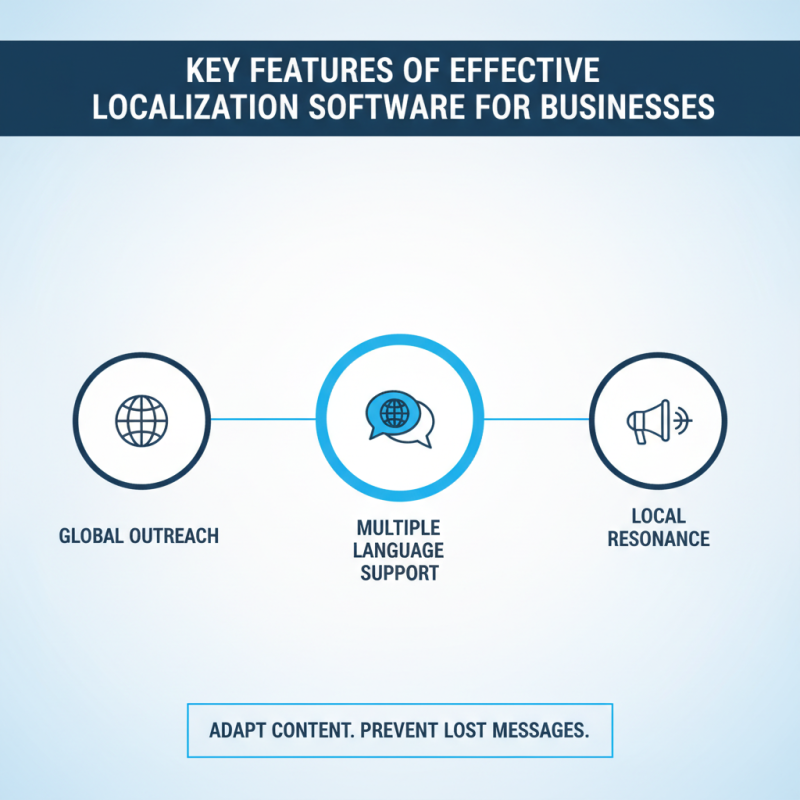
Effective localisation software is crucial for businesses aiming for global outreach. One key feature is support for multiple languages. This allows businesses to adapt their content to various markets. It ensures that marketing materials resonate locally. Without this, messages can get lost in translation.
Another important aspect is cultural adaptation. Localisation software should help in tailoring content to fit cultural nuances. This includes adjusting imagery, tone, and examples. It avoids potential pitfalls that may offend local sensibilities. Businesses can create connections that matter.
Furthermore, the ability to integrate with existing systems is vital. Software that works seamlessly with other tools saves time and resources. Businesses can maintain consistency across platforms while localising. However, relying solely on automation might lead to oversights. Human review remains essential to ensure quality and relatability. Balancing technology and human insight is key to successful localisation.
Impact of Localisation on Customer Experience and Engagement
Localisation software is vital for businesses aiming for global reach. Its impact on customer experience and engagement cannot be overstated. When a product speaks the consumer's language, it fosters a connection. Customers feel valued when content resonates with their culture. They are more likely to engage with brands that understand their needs and preferences.
Tips: Understand cultural nuances. Localisation goes beyond language. It involves symbols, colors, and themes. What works in one region may offend in another. Spend time researching local customs and attitudes. This knowledge enhances engagement.
A tailored customer experience can lead to brand loyalty. When users find relevant content, they spend more time interacting. Enhanced user interfaces that respect local preferences improve satisfaction. However, localisation can be challenging. Maintaining quality while adapting content can be tough. Businesses must regularly review and update translated materials to ensure relevance and accuracy.
Tips: Regularly collect feedback. Customer opinions can guide your localisation efforts. Evaluate how different messages resonate in various markets. Adjust strategies based on real insights, not assumptions. Engaging with local influencers can also provide valuable perspectives.
Why is Localisation Software Essential for Global Business Success? - Impact of Localisation on Customer Experience and Engagement
| Dimension |
Impact |
Customer Experience Metric |
Engagement Rate (%) |
| Language Availability |
Increases accessibility |
Overall satisfaction |
75% |
| Cultural Relevance |
Enhances relatability |
Brand loyalty |
80% |
| User Interface Customization |
Improves usability |
Task completion rate |
90% |
| Support for Local Payment Methods |
Increases transactions |
Purchase frequency |
85% |
| Timely Updates and Local News |
Boosts trust |
Engagement with content |
78% |
Challenges in Implementing Localisation Software in Global Markets
Implementing localisation software in global markets poses numerous challenges. Each region has unique cultural nuances that technology alone often struggles to capture. Translating text is just the tip of the iceberg. Companies must consider local customs, idioms, and preferences. A line of text can mean different things in different cultures.
Moreover, integrating localisation software with existing systems can create complexity. Businesses may face technical hurdles, especially when dealing with multiple languages and formats. Staff training is crucial here. Employees need to understand how to leverage these tools effectively. Without proper training, the software falls short of its potential.
Another significant hurdle is maintaining consistency across various markets. It’s easy for translated content to drift into inaccuracy. Regular updates and checks are essential. A global brand can quickly lose credibility with inconsistent messaging. Companies must stay vigilant in their localisation efforts. Balancing speed and accuracy requires continuous reflection and adjustment. Effective localisation is an ongoing journey, not a one-time task.
Challenges Faced in Implementing Localisation Software