What is Lokalise Translation and How Does It Work?
Lokalise translation is reshaping how businesses handle multilingual content. It provides a user-friendly platform for managing translations. Companies worldwide are embracing this innovative tool to streamline their localization process. With Lokalise translation, teams can collaborate efficiently, reducing time spent on communication.
Many organizations struggle with translation quality and consistency. Lokalise helps bridge this gap by offering features like context previews and translation memory. Users can track changes and maintain brand voice across languages. However, relying solely on this technology may lead to oversights.
In addition to automation, human touch is essential. Review processes can reveal nuances lost in digital translation. The balance between efficiency and accuracy is vital. Lokalise translation promises convenience but requires careful implementation for optimal results. Transitioning to this tool can be challenging yet rewarding.

What is Lokalise and Its Role in Modern Translation Services
Lokalise plays a crucial role in modern translation services. It combines technology and human effort to streamline the localization process. According to recent industry reports, the global localization market is expected to reach $49.5 billion by 2027, highlighting the demand for efficient translation tools.
This platform supports various file formats, making it versatile. Companies can manage translations in real-time, minimizing delays. Fast-paced businesses must keep up with market demands. A significant 60% of consumers prefer content in their native language. This statistic emphasizes the importance of accurate translation.
However, the industry still faces challenges. Machine translations often lack cultural nuance. A report indicates that 90% of localization teams find balancing machine and human translation difficult. This reveals a gap that needs addressing. As businesses adopt more technology, they must not overlook the human element crucial to effective translation.
Lokalise Translation Impact on Project Management
Key Features of Lokalise Translation Platform
The Lokalise translation platform is designed to streamline the localization process. One key feature is its collaborative environment. It allows teams from different regions to work together efficiently. According to a recent report, companies that embrace collaborative translation see a 30% faster time-to-market. This speed is crucial in today's competitive landscape.
User-friendly interfaces also stand out in this platform. With intuitive design, users can manage translation projects seamlessly. Data shows that platforms that focus on user experience achieve a 25% increase in user satisfaction. This is vital for keeping translation efforts on track. However, some users still report frustration with complex project setups. This indicates room for improvement.
Another notable feature is the integration capabilities. The ability to connect with various tools enhances flexibility. Studies reveal that 63% of successful localization projects use integrated systems. While integration improves workflow, it can also lead to confusion without proper documentation. Companies need to address this issue for smoother operations. Overall, these elements contribute to enhanced productivity, but challenges remain that require attention.
Step-by-Step Process of Utilizing Lokalise for Document Translation
Utilizing a translation platform can streamline the document translation process. Begin by creating a project for your specific document. Then, upload the files that require translation. The platform will format them appropriately, but issues might arise with complex layouts. Thus, reviewing the input files before uploading is crucial.
Next, select the target languages for translation. Be mindful of nuances in cultural contexts which can affect the translation. After this, a translation team or automated tools can start working on your document. Always be prepared to make adjustments. The initial outputs may lack precision. Involve native speakers to enhance accuracy.
Once the translation is complete, the platform typically offers a review phase. This step can expose areas needing attention or improvement. Don't skip it; errors often lie beneath the surface. Finally, download the translated document and ensure the formatting remains intact. You might find inconsistencies, prompting further refinements. Engaging in this iterative process leads to better results over time.
What is Lokalise Translation and How Does It Work? - Step-by-Step Process of Utilizing Lokalise for Document Translation
| Step |
Description |
Duration |
Key Tools |
| 1 |
Upload documents for translation |
Instant |
Lokalise platform |
| 2 |
Select target languages |
5 minutes |
Language selection tool |
| 3 |
Assign translators |
15 minutes |
Team management tools |
| 4 |
Translation process |
Variable |
Translation memory, glossary |
| 5 |
Review and edit translations |
1-2 days |
Editing tools |
| 6 |
Export translated documents |
Instant |
Export options |
Industry Statistics on the Effectiveness of Localization Technology
Localization technology plays a crucial role in today's global market. Companies invest significantly in this area to reach diverse audiences. Statistics show that effective localization can enhance user engagement by up to 80%. This means consumers are more likely to interact with content that feels native to them. However, many organizations still struggle with implementation.
Despite the potential benefits, a considerable portion of companies finds localization challenging. Only 30% feel confident in their strategy. Common issues include cultural nuances and language variations. These complexities can lead to miscommunication or, worse, alienation of target audiences. It is essential to regularly reassess and refine localization processes for better outcomes.
User feedback can offer valuable insights into localization effectiveness. Often, it reveals gaps in understanding cultural context. Companies can improve by actively seeking this feedback. It may highlight areas needing attention, sparking innovation in localization efforts. Embracing these imperfections can lead to growth. As the industry evolves, so too must the approaches to localization technology.
Comparative Analysis: Lokalise vs. Traditional Translation Methods
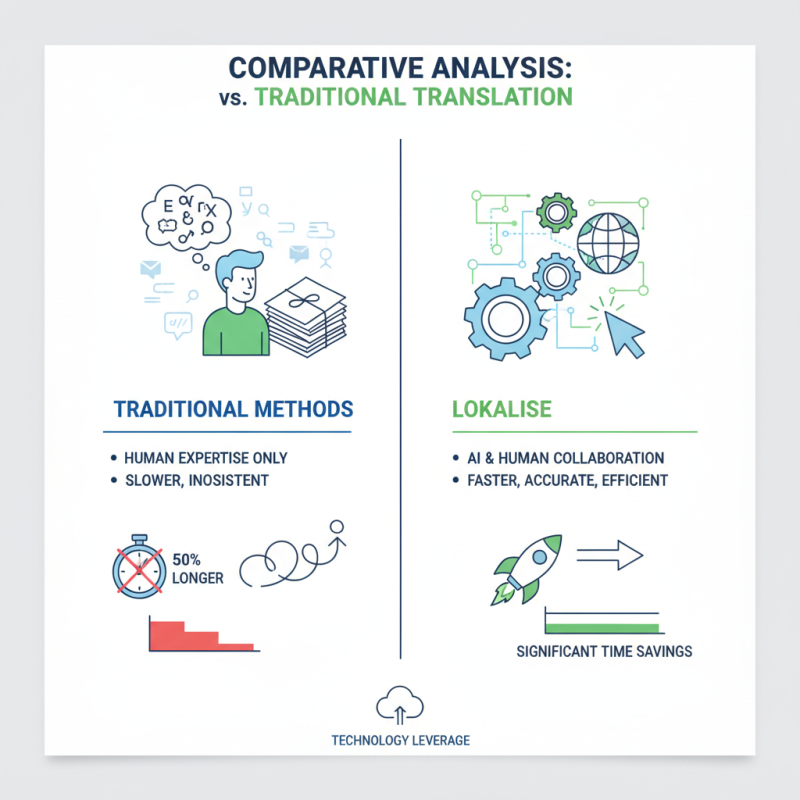
In the realm of translation, traditional methods often rely on human expertise alone. This can lead to inconsistencies and delays. For example, a report from the Localization Industry Standards Association suggests that traditional translation can take up to 50% longer due to manual processes. Meanwhile, modern translation solutions leverage technology. They provide efficiencies that human-only methods cannot match.
Tips: Embrace new technologies. They can streamline your localization efforts.
Lokalise and similar platforms enable collaborative workflows. This is a significant shift from conventional methods. Teams can access projects in real time, reducing miscommunication. A recent industry analysis noted that such platforms can cut project turnaround time by as much as 40%. However, this transition isn't flawless; it requires training and adjustment.
Tips: Invest time in training your team. Well-prepared members maximize the benefits of new tools.
Not all content translates well through automation. Nuances can be lost. A survey indicated that 65% of localization professionals still prefer some human input for quality assurance. Balancing technology and human oversight is essential. It ensures that contextual meaning is preserved.