Top Machine Translation Software for Efficient Language Processing?
In an increasingly interconnected world, effective communication across languages is vital. Machine translation software has emerged as a powerful tool for breaking down language barriers. As businesses expand globally, the need for efficient language processing grows. Selecting the right machine translation software can significantly enhance productivity.
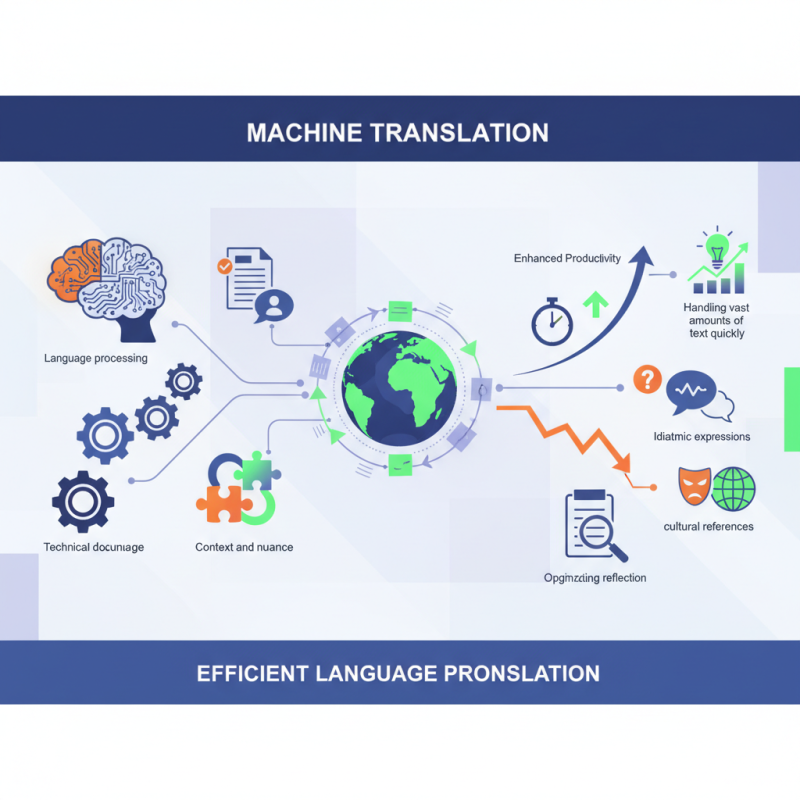
Numerous options exist in the market today. Each program offers unique features and capabilities. Some excel at translating technical documents, while others focus on conversational language. However, the effectiveness of these tools can vary. Users often encounter issues with context and nuance, leading to inaccuracies.
Real-world application reveals both strengths and limitations. Machine translation software can handle vast amounts of text quickly. Yet, it may struggle with idiomatic expressions or cultural references. Understanding these challenges is crucial for users aiming to optimize their translations. Engaging with this technology requires ongoing reflection on its efficacy and potential improvements.
Overview of Machine Translation Software
Machine translation (MT) software has revolutionized how we process languages. It has become essential for global communication. According to a report by the Global Industry Analysts, the MT market is expected to reach over $1.5 billion by 2026. This growth reflects the increasing need for swift translation services in business and education.
Despite significant advances, challenges remain. Many MT systems struggle with context and nuance. For instance, idiomatic expressions often lead to inaccurate translations. A study by the American Translators Association revealed that nearly 20% of translations done by MT software contain errors in meaning. This can create misunderstandings, especially in technical documents or legal texts.
Another notable aspect is the quality of training data. Machine learning-based systems rely heavily on the data fed into them. If the data is biased or limited, the output will reflect those shortcomings. Practitioners must continually evaluate and refine these systems to improve accuracy. It's a reminder that while technology has advanced, human oversight is still crucial in ensuring high-quality translations.
Key Features to Consider in Translation Tools
When looking for machine translation software, several key features stand out. User-friendly interfaces allow for smooth navigation. Simple designs help users input text easily. Language support is crucial. A broad range of languages, including less common ones, is important. Diverse options cater to various needs.
Contextual accuracy can make or break a translation tool. Algorithms should understand nuances and idioms. This reduces miscommunication. Customizable settings are also valuable. Users can adjust the output based on specific requirements. Some tools allow users to save frequently used phrases, which is a convenient feature.
Real-time collaboration can enhance productivity. Teams working on translations need tools that support this feature. Integration with other applications can streamline workflows. However, not all tools excel in this area. Testing different options is wise. Users often find that some tools miss the mark in certain languages. Constant improvements are necessary for future development.
Top Machine Translation Software for Efficient Language Processing
| Feature |
Description |
Support Languages |
User Interface |
API Availability |
| Neural Machine Translation |
Advanced algorithms providing more natural translations. |
Over 100 languages |
User-friendly and intuitive design. |
Yes |
| Customization Features |
Allows users to add industry-specific terminology. |
Multiple languages with a focus on terminology. |
Responsive and customizable. |
No |
| Real-time Translation |
Instant translation with live text input. |
Supports major global languages. |
Simple and effective interface. |
Yes |
| Document Translation |
Capability to translate various document formats. |
Wide range of languages supported. |
Professional and clean layout. |
Yes |
| Offline Translation |
Ability to translate without internet access. |
Limited to selected languages. |
Basic and straightforward. |
No |
Top Machine Translation Software in 2023
The demand for machine translation (MT) software has surged in 2023. Businesses now rely heavily on effective language processing tools. A recent industry report reveals that 70% of companies prioritize quick translation capabilities. They seek tools that can handle various languages efficiently.
Many MT solutions utilize advanced algorithms and neural networks. These technologies improve accuracy and fluency in translations. However, reports indicate that some software can struggle with context. This often leads to misunderstandings in translations. Users frequently note that idiomatic expressions can be misinterpreted.
Usage statistics show that nearly 65% of organizations notice discrepancies in translated content. These inconsistencies highlight the importance of post-editing. Although machine translation is efficient, human oversight remains crucial. A blend of technology and human expertise may yield the best results in language processing.
Evaluation Criteria for Effective Language Processing
When evaluating machine translation software, focus on key criteria. Accuracy is vital. The translation should convey the original meaning clearly. A good tool should handle different languages and dialects. It's important to consider regional variations.
User experience also matters. A simple interface makes it easier. Users should find features without hassle. Navigation should be intuitive. Frequent updates can improve functionality. Look for consistent user feedback to identify strengths and weaknesses.
**Tip:** Always test the software before committing. Use sample texts that represent your needs.
Another criterion is speed. Fast processing saves time. However, speed should not compromise accuracy. Sometimes, slower translations are more reliable. Balance is essential.
**Tip:** Set clear expectations regarding translation timelines.
Finally, consider customization options. Personalization can enhance the translation process. Different industries may require specialized vocabulary. Flexibility in settings is a plus. Notice what works and what doesn't during selection.
Top Machine Translation Software Evaluation
This bar chart represents the evaluation criteria for top machine translation software. The dimensions assessed include Accuracy, Speed, User Interface, Language Support, and Cost, with scores ranging from 0 to 100.
Future Trends in Machine Translation Technology
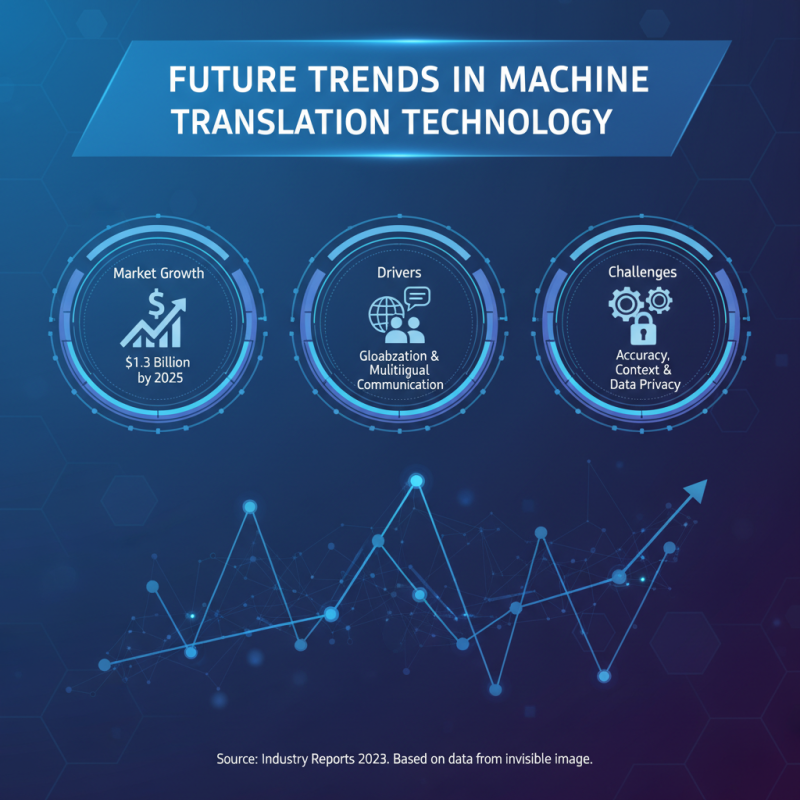
The landscape of machine translation technology is rapidly evolving. Recent reports indicate that the global market for machine translation is expected to reach $1.3 billion by 2025, driven by increasing demand across various sectors. This growth is fueled by globalization and the need for multilingual communication. However, as the technology advances, certain challenges remain.
Quality and accuracy are paramount. A study found that up to 60% of translations produced by machine tools require human review to ensure clarity and context. The nuances of language often lead to unexpected translation errors, especially in idiomatic expressions. This limitation highlights the ongoing need for hybrid models that combine machine efficiency with human expertise.
Furthermore, with the rise of neural machine translation, the technology is adapting to context more effectively. Reports suggest that neural networks improve translation quality by up to 85%. Yet, issues like cultural sensitivity and domain-specific language still pose significant obstacles. As the industry moves forward, addressing these gaps will be crucial for achieving truly seamless translation experiences.