Why Use Translation Software for Business to Enhance Global Communication?
In today's interconnected world, effective communication is key for global success. Companies face unique challenges when dealing with diverse languages and cultures. This is where translation software for business comes into play. It offers solutions that bridge language gaps in real time, making cross-border interactions smoother.
Using translation software for business can enhance collaboration between teams from different countries. It reduces misunderstandings and nurtures relationships. However, relying solely on technology isn't a perfect solution. There are nuances in language that software sometimes overlooks. A machine may not grasp the subtleties of human emotion or context.
Despite these limitations, translation software for business remains invaluable. Companies using this technology often see improved efficiency and increased reach. They can convey their message clearly, but it is essential to combine software with human insight. This ensures that communications resonate on a personal level. Balancing technology and human touch is vital for meaningful global exchanges.

The Importance of Global Communication in Modern Business
In today's interconnected world, global communication is vital for business success. According to a 2023 report by the Globalization and Localization Association, 75% of companies believe effective communication drives growth. Yet, many businesses still struggle with language barriers. Over 56% of professionals report miscommunication due to these obstacles.
Translation software can be a game changer. It enables firms to communicate in various languages swiftly. This tool can help them forge better relationships with international clients. However, it is not foolproof. Relying solely on software can lead to nuances being lost. Misinterpretations may occur, affecting vital negotiations.
Moreover, not all translation tools deliver the same quality. Organizations must choose wisely. A study showed that 63% of businesses experienced challenges due to poor translations. This indicates that while technology helps, human oversight is critical. Balancing automated solutions with human expertise will ensure a more effective global outreach.
Impact of Translation Software on Global Communication in Business
This chart illustrates the key benefits of using translation software in business for enhancing global communication, highlighting factors such as increased efficiency, cost reduction, improved accuracy, broader reach, and faster turnaround time.
How Translation Software Bridges Language Barriers
Translation software has become essential in today’s global business landscape. It helps companies communicate effectively across different languages. Without it, messages can easily get lost or misunderstood. An accurate translation can foster trust and build long-term relationships. A single poorly translated email could damage reputations.
This software acts as a bridge over language barriers. It allows instant translations and facilitates real-time conversations. Think about a meeting with international partners. Translation tools can simplify discussions, ensuring everyone is on the same page. However, not every translation is perfect. Nuances might slip through the cracks. Cultural context matters greatly, so it’s crucial to review translations carefully.
Relying solely on software isn't foolproof. Sometimes, it can miss idioms or local slang. This is why human oversight is important. Combining technology with human expertise helps enhance accuracy. In a world where miscommunication can lead to lost business opportunities, finding the right balance is key. Each translation should be treated with care to truly connect on a global scale.
Why Use Translation Software for Business to Enhance Global Communication? - How Translation Software Bridges Language Barriers
| Aspect |
Description |
Benefits |
| Cost Efficiency |
Reduces the need for human translators for simple tasks. |
Lower translation costs over time. |
| Speed |
Delivers faster translations compared to traditional methods. |
Accelerates communication processes. |
| Consistency |
Ensures uniformity in terminology across all documents. |
Improves brand consistency and professionalism. |
| Integration |
Can be easily integrated with existing business tools. |
Streamlines workflow and communication. |
| Availability |
Accessible anytime, anywhere with internet connection. |
Enhances remote collaboration across locations. |
Key Features of Translation Software for Businesses
In today's global market, effective communication is vital. Translation software bridges the language gap. It enables businesses to connect with clients and partners worldwide. A report by Common Sense Advisory found that 72.4% of consumers prefer to buy products in their native language. This statistic highlights the importance of localized content.
Key features of translation software include real-time translation. This allows instant communication across different languages. Another feature is the ability to manage large volumes of text efficiently. Businesses often face overwhelming amounts of data. In fact, the average company deals with thousands of documents monthly. A good translation tool can streamline this process greatly.
Tips: When choosing translation software, consider user-friendliness. Complicated software can slow down your workflow. Also, look for tools that support collaboration. Many teams share files across regions. Thoughtful integration with current systems can help.
However, reliance on technology has its downsides. Automatic translations may lack cultural context. This can lead to misunderstandings. Understanding your target audience is crucial. Tailoring translations to local nuances can enhance effectiveness and engagement.
Benefits of Using Translation Software for Effective Communication
In today's interconnected world, translation software plays a crucial role in enhancing business communication. According to a recent study by Common Sense Advisory, 75% of global consumers prefer to buy products in their native language. This highlights the importance of effective communication in driving sales and fostering customer loyalty. Translation software allows businesses to connect with diverse audiences seamlessly. It removes language barriers that can hinder understanding and discourage potential clients.
Using translation tools can enhance efficiency. Companies can respond to client inquiries quickly and accurately, reducing the time spent on communication. In fact, studies show that organizations that embrace translation technology see a 30% increase in operational efficiency. However, relying solely on automated translation may lead to misinterpretations. Some nuances and context might be lost, creating potential misunderstandings. It's vital for businesses to review and refine translations before using them.
Moreover, consistent use of translation software creates a unified brand voice worldwide. Companies can establish a familiar tone across various languages. Yet, managing numerous languages and versions can be challenging. Sometimes, it requires a dedicated team to ensure quality. Poorly translated content can reflect negatively on a brand. Businesses need to balance technology with human oversight for optimal results. Investing in translation software is about improving communication while being mindful of its limits.
Case Studies: Successful Global Communication with Translation Tools
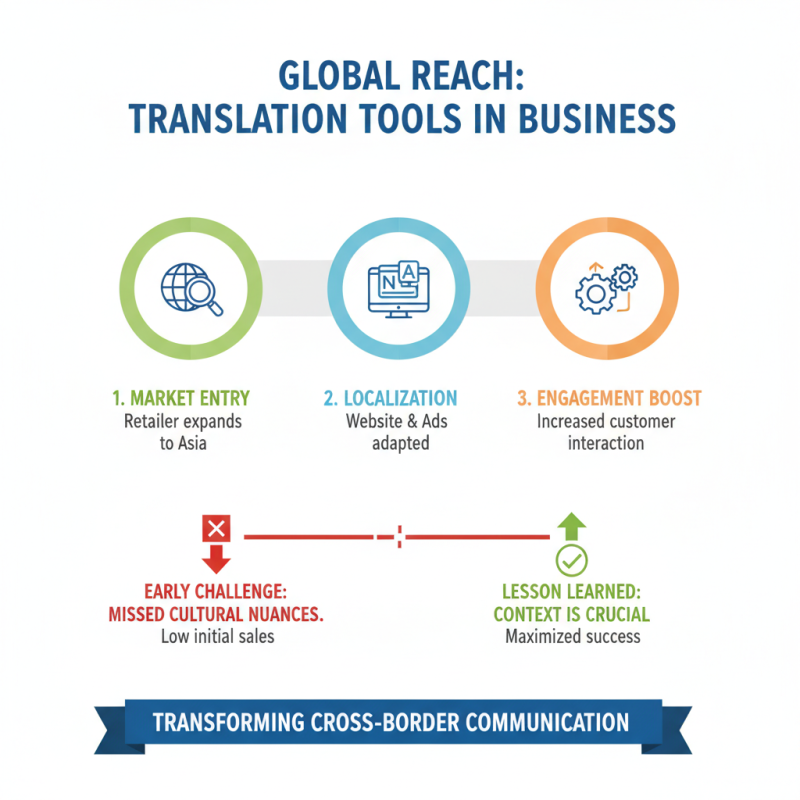
Translation tools have transformed how businesses communicate across borders. A leading retail company successfully entered Asian markets using translation software. They localized their website and marketing materials. This approach maximized customer engagement. However, initial translations missed cultural nuances. This oversight affected early sales figures. It highlighted the importance of context in communication.
In another case, a tech firm implemented translation software for their user manuals. The results were mixed. Some users praised the clarity, while others found odd phrases. User feedback revealed gaps in automated translations. Despite this, the company improved their software integrations continuously. They learned the value of blending human expertise with technology. This combination enhanced customer satisfaction significantly.
These cases show that while translation software helps bridge gaps, it isn't flawless. Each business must evaluate their needs. Cultural insights and human touch remain crucial for effective communication. The journey of refining the translation process never truly ends. Adjusting to feedback is essential for real success.