What is XLIFF Format and How is it Used?
In the world of localization and translation, the XLIFF format plays a crucial role. XLIFF stands for XML Localization Interchange File Format. It is designed to standardize the information exchanged during the translation process. This format simplifies how text and metadata are shared across different tools and platforms.
Many companies use the XLIFF format to manage multi-language projects effortlessly. It allows for a clearer organization of source and target text. Yet, the XLIFF format can be complex. Those new to it often struggle with implementing it correctly. The structure is not always intuitive, and errors can emerge if the format is mishandled.
Understanding XLIFF is essential for effective localization. It is not just a technical requirement. It embodies best practices in translation. Companies can benefit immensely from mastering XLIFF's nuances. However, as with any tool, it requires practice and thoughtful use to avoid pitfalls. Thus, while the XLIFF format offers significant advantages, those advantages must be harnessed with care.

What is XLIFF Format?
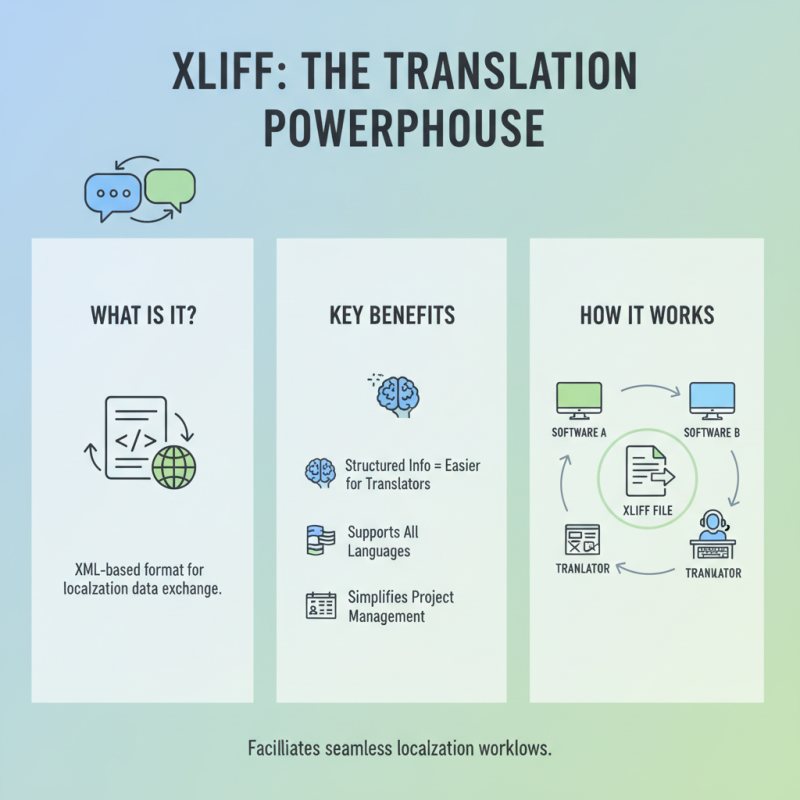
XLIFF, or XML Localization Interchange File Format, is a powerful tool in the translation industry. It is specifically designed to facilitate the exchange of localization data between different software programs. XLIFF files contain structured information, making it easier for translators to understand and process text. This format supports various languages and allows for the easy management of localization projects.
One of the key features of XLIFF is its ability to separate content from its context. This means that translators can work on text without impacting the layout. However, working with XLIFF can be challenging for new users. They may struggle with the XML structure. The format uses tags that can confuse those unfamiliar with coding. This can lead to mistakes when editing files.
When using XLIFF, it’s crucial to maintain consistent terminology throughout the project. Without uniformity, translations might end up differing greatly from one another. This inconsistency can frustrate readers. It’s a reminder that attention to detail is key. Despite its complexity, XLIFF remains a favored choice for many localization professionals. They appreciate its capability to streamline processes, even if it requires a learning curve.
History and Development of XLIFF
The XLIFF format, which stands for XML Localisation Interchange File Format, has an intriguing history. It originated in the early 2000s to address the challenges of translation and localization. Before XLIFF, working with different formats created inconsistencies and confusion. Translators faced hurdles every day, making the process tedious.
The development of XLIFF was driven by the need for a standardized approach to handling multilingual content. Various stakeholders came together to create a unified format that would be flexible and consistent. Despite its advantages, the adoption of XLIFF has not been without criticism. Some users find it complex and not as user-friendly as they hoped. This reflects a gap between intention and execution in technology.
Over the years, XLIFF has evolved. It has incorporated new features while still retaining its core principles. Yet, the format's ability to adapt continues to be questioned. Does it meet the changing demands of modern localization? This is a point of reflection for many in the industry. Understanding its history helps us appreciate both its potential and its limitations.
Key Features and Benefits of Using XLIFF
XLIFF, or XML Localization Interchange File Format, serves as a key player in the localization industry. This format simplifies the translation process by allowing translators to work with structured text. The separation of content from its formatting means translators can focus on language without distraction. This is particularly useful when handling software or web applications where formatting is critical.
One standout feature of XLIFF is its compatibility with various tools. Different translation software can read and write XLIFF files, making collaboration easier. It also offers features like context information and status tracking, which enhance project management. However, not all tools handle XLIFF perfectly. Sometimes errors can occur, requiring manual correction.
Another important benefit is transparency in the localization workflow. XLIFF files make it easy to see changes and updates over time. This is helpful for quality control. Yet, creating an accurate XLIFF document can be challenging. Misaligned segments or missing context can create confusion. A careful review process is essential for leveraging the full potential of XLIFF in language projects.
XLIFF Format Usage Statistics
Common Applications of XLIFF in Localization
XLIFF, or XML Localization Interchange File Format, plays a vital role in localization. This format streamlines the translation process, allowing different tools to work together effectively. According to Common Sense Advisory, 75% of companies often apply XLIFF in their localization workflows. This demonstrates its prominence in managing multilingual content efficiently.
A major application of XLIFF is in software localization. Developers use it to manage user interface texts, which differ by language. In a recent survey by the Localization Industry Standards Association, about 60% of translation agencies reported that XLIFF has improved their efficiency. However, challenges remain. Not all tools fully support XLIFF. This inconsistency can lead to errors or lost context during translations.
Another common use of XLIFF is in website localization. Businesses frequently adapt their sites for global audiences. A study shows that localized websites can increase conversion rates by 300%. Yet, organizations may struggle with maintaining translation quality. Despite using XLIFF, some overlook cultural nuances. It's crucial to remember that localization is more than translation—it’s about connection.
How to Convert and Use XLIFF Files in Translation Workflows
XLIFF, or XML Localization Interchange File Format, is widely used in translation workflows. It streamlines the localization process by providing a standardized format for exchanging translated content. Many translators appreciate its ability to keep the original text alongside the translation. This context is critical in ensuring accurate and meaningful translations.
To convert and use XLIFF files effectively, start by selecting a suitable translation tool. These tools can read and generate XLIFF files. When working with these files, be mindful of the structure. Mistakes can occur if tags are altered or removed. Always maintain the original formatting to avoid confusion.
Tips: Regularly back up your XLIFF files. This can save you from losing important translations. Also, collaborate with your team. Sharing feedback during the translation process enhances clarity. When using XLIFF, take time to understand each segment. Some parts may be challenging, and reflection on these sections can improve your skills over time.
What is XLIFF Format and How is it Used?
| Dimension |
Description |
Usage in Translation Workflows |
| Format Type |
XML-based file format |
Used for exchanging translation data |
| File Extension |
.xliff or .xlf |
Standard file extension for XLIFF files |
| Key Features |
Text segments, translation memory tags, metadata |
Facilitates localization and translation consistency |
| Supported Languages |
Multiple languages including but not limited to English, Spanish, Chinese |
Helps in multilingual projects |
| Conversion Tools |
Various online and offline tools available |
Convert non-XLIFF files to XLIFF |