Why Choose Machine Translation Tools for Global Sourcing?
In today's global marketplace, businesses increasingly rely on machine translation tools to streamline sourcing. A recent report by Statista indicates that the machine translation market is projected to reach $1.5 billion by 2026. This growth reflects the rising demand for efficient communication across languages in international trade.
Expert Susan Lindgren, a renowned linguist and machine translation consultant, points out, "Machine translation tools have revolutionized how companies approach global interactions." These tools not only break language barriers but also enhance operational efficiency. However, despite their advantages, they are not without limitations. Automated translations can lack nuance and cultural context, necessitating human review to ensure accuracy.
As organizations expand globally, the reliance on machine translation tools becomes clear. Yet, the quest for quality must not be overlooked. Businesses should balance speed with precision to maximize the benefits from these technologies.
Benefits of Machine Translation in Global Sourcing Strategies
Machine translation tools have revolutionized global sourcing strategies. They facilitate communication across language barriers. Many companies rely on these tools to access international markets. The speed and efficiency of translation software allow for quicker decision-making. This is essential in today's fast-paced global economy.
Utilizing machine translation can significantly enhance negotiation processes. There may be challenges, such as maintaining context and nuance. Not all technical terms translate seamlessly. Companies often encounter misunderstandings due to these limitations. However, consistent use improves the accuracy of translations over time. This gradual refinement can lead to more effective partnerships internationally.
The cost savings associated with machine translation tools are significant. Reducing the need for human translators lowers expenses. Yet, businesses must remain mindful of potential inaccuracies. Regular reviews and adjustments are necessary to ensure quality. Machine translation is a powerful ally in global sourcing, but it requires continuous oversight.
Impact of Machine Translation on Cost Efficiency in Supply Chains
Machine translation tools are revolutionizing global sourcing. These tools enhance communication across borders, bridging language gaps. This capability significantly impacts cost efficiency within supply chains. Reduced misunderstandings lower expenses related to errors. Furthermore, quick translations expedite negotiations, allowing businesses to make informed decisions faster.
In a world where every second counts, speed is vital. Machine translation automates routine communication, freeing up human resources for more complex tasks. It helps companies handle more suppliers and partners without increasing overhead costs. However, reliance solely on machine translation can lead to oversights. Nuanced expressions may get lost in translation, undermining quality and relationships.
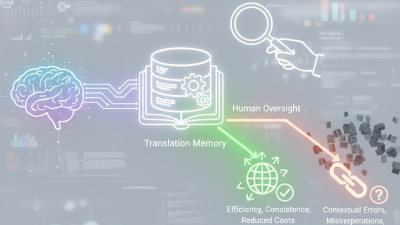
Balancing technology with human oversight is crucial. While machine translation offers cost advantages, it is not infallible. Companies must assess context and cultural nuances. Investing in trained personnel to review translations can mitigate potential pitfalls. Making strategic choices is essential for maximizing the benefits while minimizing errors.
Accuracy and Quality Improvements in Machine Translation Technologies
Machine translation tools have revolutionized global sourcing. They offer significant improvements in accuracy and quality. Recent advances in algorithm technology enhance the ability to capture the nuance of different languages. This results in translations that are more reliable than ever. Yet, these tools are not without limitations. Sometimes, cultural context and idiomatic expressions can still pose challenges.
When using machine translation, consider the following tips: Always review the output for contextual accuracy. Be prepared to edit and refine translations for precision. Collaboration with a native speaker can enhance the final product. Understanding the tool's limitations is essential. While it can handle simple phrases well, complex sentences often require human oversight.
Another important aspect is consistency. Many businesses find that maintaining brand tone can be tricky with automated translations. It's vital to establish guidelines for tone and style. Regularly updating your translation resources can lead to continuous improvement. Remember, technology is evolving, but the human touch remains indispensable.
Global Sourcing: Accuracy and Quality Improvements in Machine Translation
Case Studies: Successful Global Sourcing with Machine Translation Tools
Global sourcing has become increasingly vital in today's interconnected economy. Companies are looking for efficient ways to engage with suppliers worldwide. Machine translation tools offer innovative solutions to bridge language barriers. Many organizations have harnessed these tools to streamline their sourcing processes.
A notable case study involves a food manufacturing company. They faced communication issues with overseas suppliers. By implementing machine translation, they improved their interactions dramatically. The tools allowed for instant translations of contracts and product specifications. As a result, misunderstandings decreased, and the sourcing cycle accelerated. However, some nuances in language still led to challenges. This experience highlighted the need for human oversight.
Another example comes from a tech firm collaborating with international partners. Machine translation tools helped them manage project timelines and expectations. They could quickly translate meeting notes and creative briefs. Nevertheless, they encountered occasional inaccuracies in technical terms. This taught them that while translation tools are powerful, they shouldn’t replace expert translators entirely. Relying solely on technology can lead to missed opportunities or errors. These cases illustrate the potential of machine translation in global sourcing while emphasizing the importance of continuous improvement.
Future Trends: The Role of AI in Evolving Machine Translation Solutions
The use of AI in machine translation is reshaping global sourcing. Advanced algorithms improve accuracy in translating diverse languages. Businesses source products worldwide, making clear communication essential. AI-driven solutions can minimize misunderstandings, enhancing collaborations.
Tips: Regularly review the translated content for context. AI may misinterpret nuanced phrases. Providing feedback can help refine translations.
Machine translation tools are evolving quickly. AI's ability to learn from large datasets enhances linguistic processing. However, these tools are not flawless. Sometimes, nuances can slip through. Engaging local experts can bridge these gaps, ensuring clarity.
Tips: Don't rely solely on technology. Human oversight is crucial for quality control. Use AI tools as a starting point. Fine-tune with human insights for optimal results.